Book Funnel vs. Lead Magnet: What's the Difference?
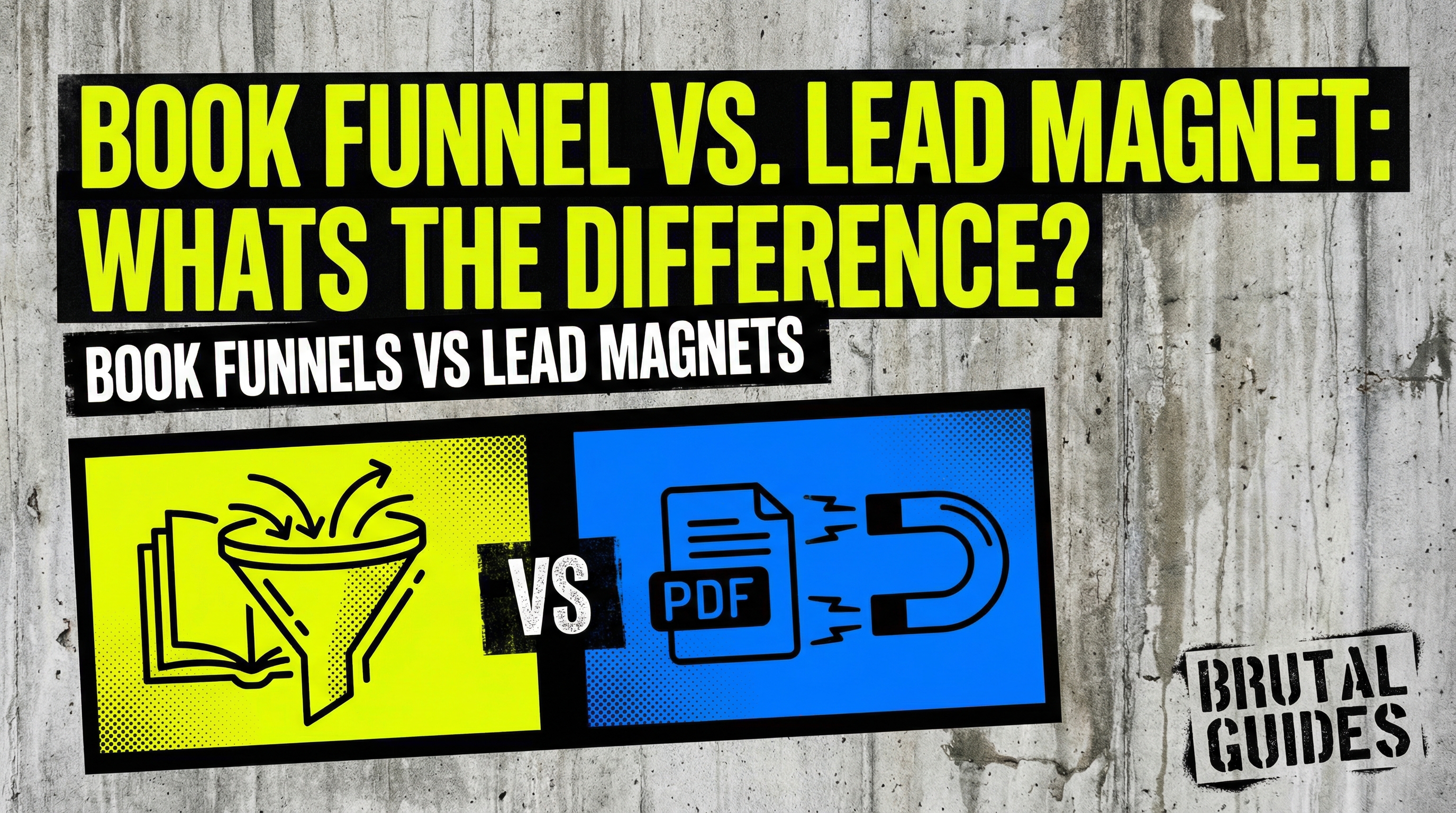
Your inbox is full of PDFs you downloaded and never opened. So is your prospect's. A book funnel is technically a type of lead magnet, but it operates in a completely different category. Where a traditional lead magnet (PDF, checklist, template) trades a piece of disposable content for an email address, a book funnel uses a full authority-building book to attract, qualify, and convert high-intent prospects through an automated system. The difference is depth, perceived value, and conversion quality. Our client data shows book funnels convert to booked calls at 8-15%, compared to 2-5% for typical lead magnets. That's not a marginal improvement. It's a fundamentally different outcome.
How a Traditional Lead Magnet Works
The standard lead magnet playbook looks like this: create a PDF, checklist, or template. Put it behind a form on a landing page. Collect email addresses. Drop those addresses into a nurture sequence. Hope some of them eventually convert.
It's simple. It's cheap to produce. And it works, sort of.
The problem is what happens after the download. Most lead magnets are never fully consumed. And honestly, that's true of books too. Only 7% of readers finished Thinking Fast and Slow, and Capital in the 21st Century was finished less than 3% of the time. These are bestsellers people paid to read. 55% of all eBooks bought never even get opened. But here's why that actually works in the book funnel's favor: a 7-page PDF gets skimmed for 90 seconds, filed in a downloads folder, and forgotten. The prospect gave you their email, but you didn't give them a reason to trust you. You traded a low-value asset for a low-commitment action.
That's fine if you're building an email list. It's terrible if you're trying to book qualified calls.
How a Book Funnel Works
A book funnel replaces the disposable content with something people actually value: a short, focused book, typically 30 chapters, built from your expertise and positioned around a specific problem your ideal client faces.
The mechanics are different too. Instead of just collecting an email and hoping, a book funnel runs a multi-step system: book as authority asset, landing page for capture, structured email nurture, and built-in CTAs that let readers self-select their level of readiness (learn more, take an assessment, or book a call).
By the time a reader reaches out, they've spent hours with your thinking. They know your approach, your philosophy, and your differentiators. That's a fundamentally different starting point than "downloaded a PDF last Tuesday."
Head-to-Head Comparison
| Factor | Traditional Lead Magnet | Book Funnel |
|---|---|---|
| Perceived value | Low: "another free PDF" | High: "the expert's book" |
| Time to consume | 5–10 min (often never opened) | Days of deep engagement |
| Trust building | Minimal: surface-level content | Substantial: 30 chapters of authority |
| Lead quality | Email addresses, mixed intent | Pre-qualified, high-intent prospects |
| Conversion to call | 2–5% | 8–15% |
| Production cost | Low | Higher upfront, better long-term ROI |
| Shareability | Rarely shared | "You need to read this" |
The Verdict
If your average client is worth $3,000 or more, the book funnel pays for itself many times over. The math is simple: a book-only license starts at $2,000/year. If one additional client closes because of it (and they will) you're already in the black.
Lead magnets are fine for building email lists. They're fine as one piece of a larger system. But they don't build authority. They don't pre-qualify buyers. And they definitely don't make a prospect think, "This is the person I need to hire."
A book does all three. Automatically.
The Brutally Honest Part
Lead magnets aren't useless. In fact, they work inside a book funnel. The best book funnels include mid-funnel lead magnets (assessments, checklists, templates) as secondary CTAs within the book itself. That's the "Investigate" lane in a well-designed book funnel system. A prospect reading your book who isn't ready to call but is ready to take a self-assessment? That's a lead magnet doing its job perfectly.
But as standalone lead generation? Lead magnets are table stakes. Every business in your industry has a free PDF. Nobody remembers it. Nobody tells a colleague, "You have to download this checklist." But people do say, "I just read this book. You need to check it out."
The difference isn't the format. It's the perceived investment. A free PDF says, "Here's some content." A book says, "I know this subject deeply enough to write the book on it." In a prospect's mind, lawyers are commodities, but authors are experts. When you hand someone your book about their specific problem, you stop auditioning for the job. They start hoping you have time for their case. That positioning gap is what separates lead gen that generates emails from lead gen that generates revenue.
Frequently Asked Questions
Should I still have lead magnets if I have a book funnel?
Yes, but their role changes. Instead of being your primary lead generation tool, lead magnets become mid-funnel assets inside the book funnel. Think assessments, worksheets, or checklists that readers access through CTAs in the book. They deepen engagement for prospects who aren't ready to call yet. The book is the front door. Lead magnets are rooms inside the house.
Can a book itself be a lead magnet?
That's exactly what a book funnel is: a book used as the lead generation asset. But the system around it is what makes it a funnel. A book on Amazon is just a book. A book with a dedicated landing page, email sequence, and built-in CTAs is a lead generation engine. Here's how the full system works.
What about ebooks? Are those the same as a book funnel?
Not usually. Most "ebooks" are glorified PDFs. 15-20 pages of repackaged blog content behind an opt-in form. They carry the same low perceived value as any other lead magnet. A Brutally Honest Guide™ is a real book: 30 chapters, professionally designed, available in physical and digital formats. The distinction matters because prospects treat it differently. An ebook gets downloaded and ignored. A real book gets read, kept, and shared.
Sources
- Brutal Guides and 90 Minute Books client data: book funnel conversion to booked call averages 8–15%; typical lead magnet conversion to call averages 2–5%
- Content engagement research: majority of downloaded PDFs and lead magnets are not fully consumed
Done with disposable downloads? See how a Brutally Honest Guide™ works or book a call to find out if a book funnel is the right play for your business.
Want a Book Funnel That Actually Works?
Stop chasing leads. Let a Brutally Honest Guide™ bring qualified prospects straight to your calendar.